Updated:
The Truth about Offerwall users: How the Payout Type Changes the User You Get
Rewarded traffic gets sold as one supply type. It is two. Whether the reward is real money or minted in-app currency changes the user's motivation, the fraud economics, the volume ceiling, and the publisher's entire business model. A buyer-side and publisher-side breakdown of what actually differs, from a network that carries both.
Written by the RevU Content Team

Ask most advertisers what rewarded traffic is and you get one answer. Ask where a specific completion came from and the answer is usually a shrug, because the invoice says “offerwall” and stops there.
That single line item covers two supply types that behave almost nothing alike. In one, the user is paid in real money. In the other, the user is paid in currency the publisher created out of nothing, redeemable only inside the app they were already playing. Everything downstream of that difference diverges: who shows up, what they will do, how much fraud pressure the inventory carries, how much volume exists, and what the publisher on the other end is actually running as a business.
This is the breakdown, from both sides of the transaction.
The short answer
GPT apps, where the reward is cash:
The offerwall is the product. Users came specifically to complete offers.
High completion density, smaller total audience.
Users optimize for money per minute and cross-shop offers across advertisers.
Structurally higher fraud pressure, because the reward is liquid.
The publisher carries real payout costs, payment rails and compliance obligations.
Virtual currency apps, where the reward is minted:
The offerwall is a menu item inside a product with a different purpose.
Low completion density, far larger total audience.
Users are topping up progress in a game they already play, not comparing your offer to a wage.
Structurally lower fraud pressure, because the reward is illiquid and the user has an account they do not want to lose.
The publisher’s real cost is not the payout but rather balancing the game economy.
If you only take one thing from this: these are not two flavors of the same inventory. They are two different products sold under one category name, and treating them as interchangeable is how advertisers end up with results they cannot explain.
What is a GPT app?
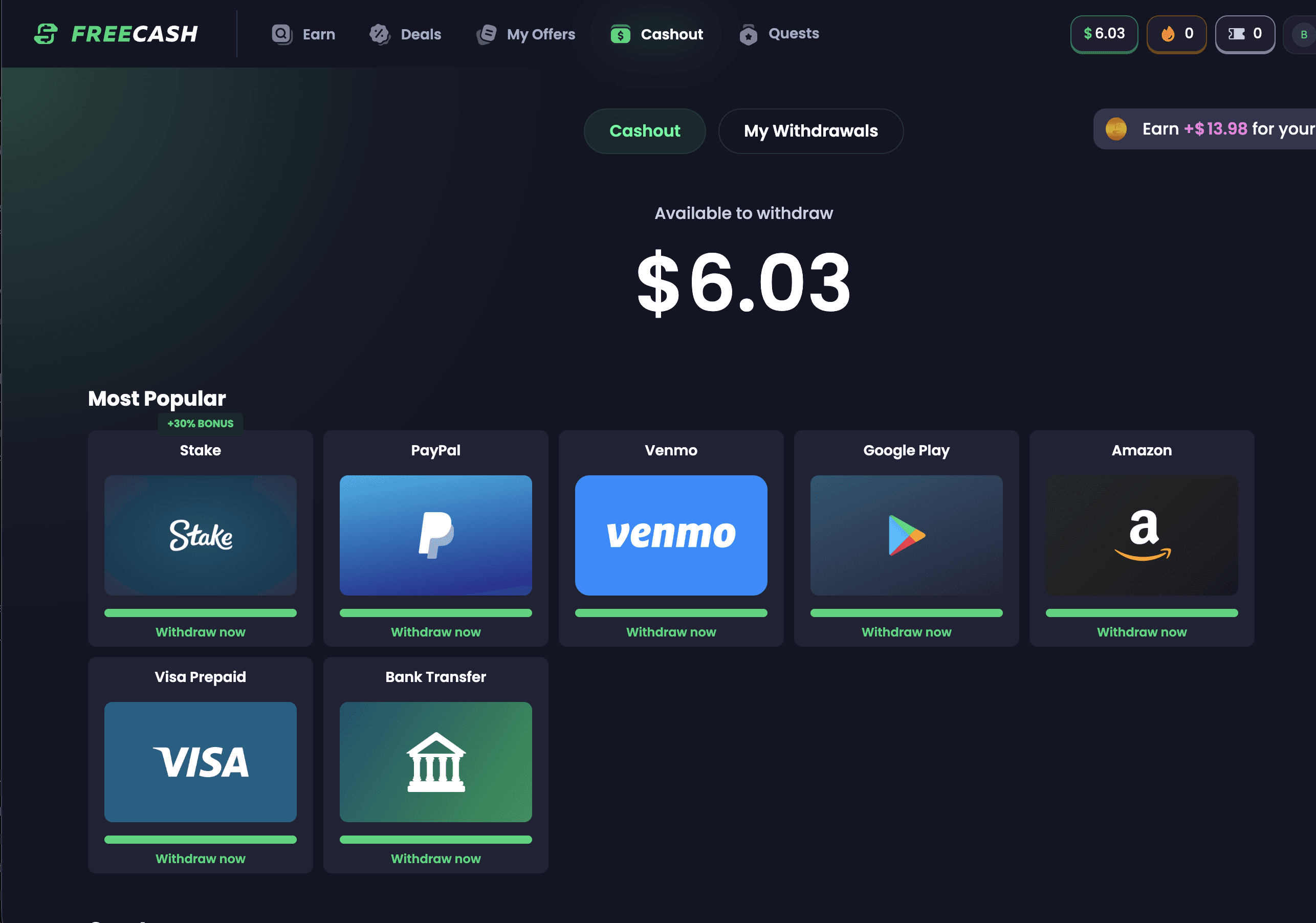
A GPT app, short for get-paid-to, is an application whose core product is a catalogue of paid tasks. Users complete offers such as installing an app and reaching a milestone, signing up for a service, answering surveys, or making a purchase, and they are paid in cash or cash equivalents like gift cards and PayPal transfers. Swagbucks, InboxDollars and Freecash are widely known examples.
The business model is a spread. The app is paid by advertisers for verified completions, pays out a portion to the user, and keeps the difference. There is no other product. If the offer catalogue is thin or the payouts are uncompetitive, users leave, because there is nothing else in the app to stay for.
What is a virtual currency app?
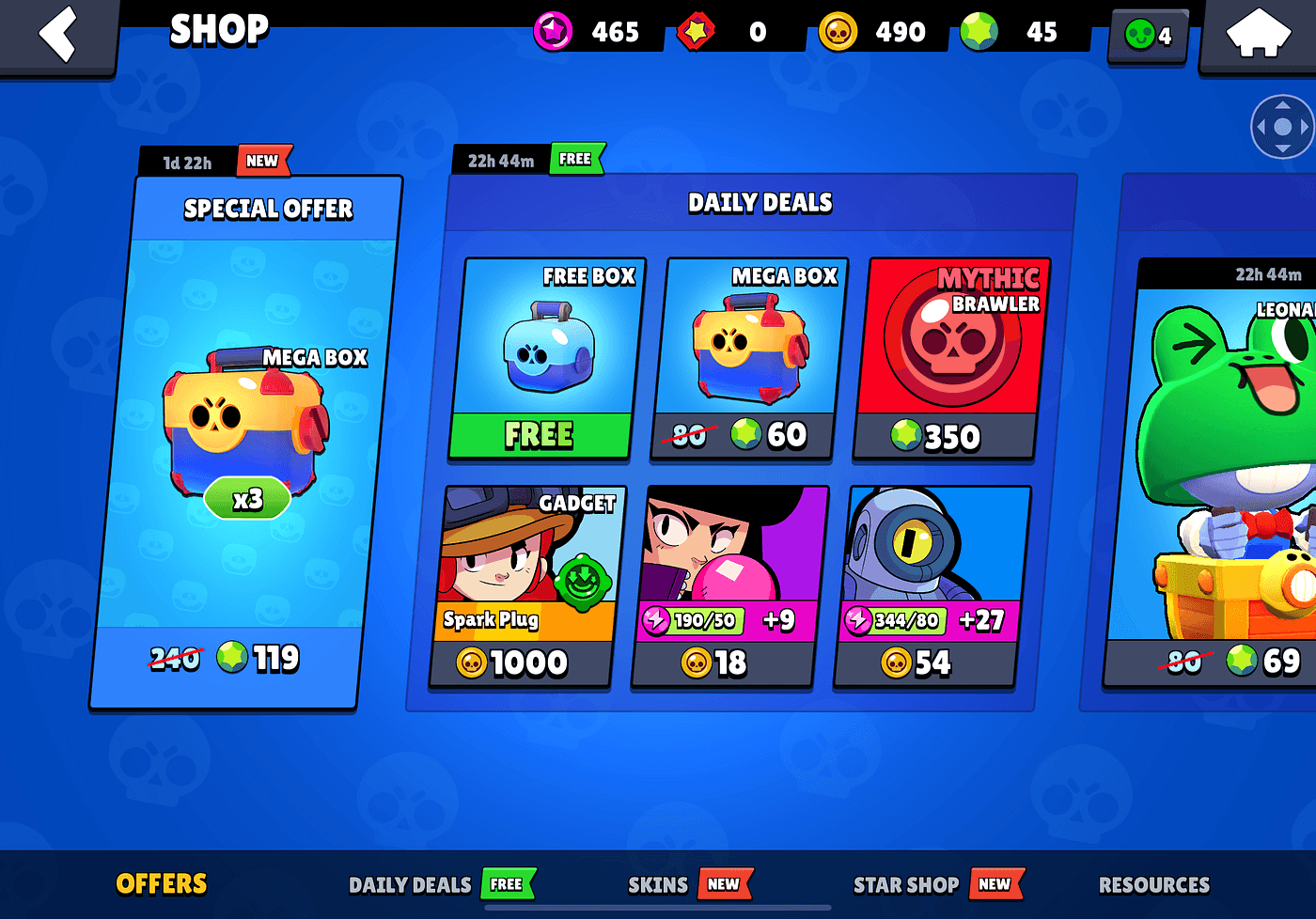
A virtual currency app is a game or application with its own internal economy, where the reward for completing an offer is premium currency, gems, coins, energy, or another in-app good that the publisher issues itself. The same currency is usually available for purchase through in-app purchases, which means the offerwall sits alongside the IAP store as an alternative way to obtain the same thing. Most free-to-play mobile games operate on this model.
The business model is not a spread. The publisher earns advertiser revenue and pays out something it manufactured at zero marginal cost. That sounds like free money and is not, for reasons covered in the next section. If you want the mechanics of the offerwall itself without the economics, we wrote a plain-language explanation.
The mint and the till: the difference everything else follows from
Start with what a reward costs the publisher, because it explains almost every other difference in this article.
A GPT app pays out of a till. Every completion creates a real liability in real money. Payout cost scales linearly with volume, and margin is the spread between what the advertiser pays and what the user receives. This is a marketplace business with genuine cost of goods sold, and it behaves like one: margin pressure, competition on payout rates, and a permanent incentive to increase volume because the unit economics are fixed.
A virtual currency publisher pays out of a mint. It issues the reward itself, and the marginal cost of one more gem is zero. But the cost is not zero, it is just not on the payout line. The real cost is that every gem given away is a gem someone might otherwise have bought, and the entire question of whether an offerwall is profitable for a virtual currency publisher comes down to the conversion ratio between offer completions and currency, anchored against IAP pricing.
Set that ratio too generously and buying gems starts to look irrational to your players, which is the actual mechanism of IAP cannibalization. Set it correctly and the offerwall is close to pure upside, because it monetizes players who were never going to spend money in the first place. We have written separately about how to anchor the ratio and about building revenue around non-spenders, which is the population this mechanic actually reaches.
So the two publishers are optimizing for different things. The GPT app wants throughput, because margin per completion is fixed and thin. The virtual currency publisher wants economy integrity, because the offerwall is a supplementary revenue line attached to a product that makes money another way.
Two different users
The person on the other end of each supply type arrived for a different reason, and it shows in what they will and will not do.
The cash user is working. They opened the app to earn money and they evaluate your offer against the other offers on the wall using a rough sense of dollars per minute. They are, functionally, semi-professional: many complete offers across several GPT apps, know which advertisers pay reliably, and are efficient about doing the minimum the offer requires. That efficiency is not dishonesty. It is a rational response to being paid piece rate.
The currency user is playing. They hit a wall in a game they already enjoy, opened the store, saw that they could get gems by completing an offer instead of paying, and picked one. They are not comparing your offer to a wage, they are comparing it to spending $4.99. They will typically tolerate a longer or more involved action if the currency reward is meaningful in a game they care about, and they are much less likely to be simultaneously working through offers on four other platforms.
The practical consequence for an advertiser is that repeat-completer overlap is far higher on cash supply. The same population of dedicated earners appears across many campaigns and many networks. Virtual currency supply draws from whoever happens to play the game, which is closer to the general mobile population.
Neither of these is the good one. A cash user who completes your deep funnel event has demonstrated real willingness to do the work, and there are plenty of products for which a motivated, efficient, price-aware user is exactly right. But they are different cohorts and they should not go into the same LTV assumption.
Fraud economics: the payoff and the deterrent
This is the difference that gets discussed least and matters most. Two separate mechanisms are at work, and they point the same way.
The first is liquidity, which sets the payoff. Cash paid to a GPT account is fungible. An operation running emulated devices at scale converts completed offers into money at close to face value, immediately, with no further steps required. The reward is the payoff.
Virtual currency is not fungible. Gems in one publisher’s game are worth nothing outside that game. The same operation has to either find a buyer for loaded accounts or push the currency through the game’s own economy to extract value, and for the large majority of titles there is no secondary market at all, which makes the extraction value zero. The extra conversion step costs money, takes time, and leaves a trail.
The second is attachment, which sets the deterrent. This one gets overlooked, and it may matter more. A virtual currency user has an account they care about: months of progress, a level, a guild, friends, and often real money already spent on in-app purchases. Getting banned costs them all of it. That is a genuine deterrent, and it applies to ordinary users at the margin, not just to organized operations. People behave differently when they have something to lose.
A GPT account holds no sunk value beyond its current balance. Losing one costs a fraudster the pending payout and nothing else, and a new account can be created immediately. The asymmetry is not subtle: on one side a ban destroys something the user spent months and money building, and on the other it destroys a few dollars of pending balance.
The honest limit on all of this: virtual currency supply is not fraud-free. The one vector that does scale is selling loaded accounts in titles with real-money trading markets, and that market is genuinely limited, both in how many games support it and in how much it pays. Beyond that you are left with ordinary users gaming reward loops inside a single app, which is a smaller and far more detectable problem than industrial offer farming.
What follows for an advertiser is not “avoid cash supply.” Plenty of good campaigns run on it. It is that cash supply requires more verification work, and you should expect a network carrying it to describe that work in specifics rather than adjectives. Our guide to verifying offerwall traffic covers what to ask. If a network runs both supply types and applies identical scrutiny to each, that is worth a question.
Density versus scale
The two supply types produce volume through opposite arithmetic.
In a GPT app, the offerwall is the whole product, so a very high share of active users engage with offers. Completion density per active user is the highest anywhere in rewarded advertising. The ceiling is that the total audience for “apps whose purpose is completing tasks for money” is finite and much smaller than the mobile gaming audience.
In a virtual currency app, the offerwall sits behind a store button inside a product whose purpose is something else. Only a small share of daily active users ever open it, and a smaller share complete anything. But the audience base is enormous, so a single large title can produce more absolute completion volume than several GPT apps combined.
For an advertiser this resolves cleanly. If you need completion velocity, a fast read on a test, or a specific niche action that only a motivated earner will bother with, cash supply gets you there faster. If you need sustained scale, virtual currency supply is where the volume lives. Most campaigns that run at size draw from both.
The compliance asymmetry
Moving real money to consumers is a materially different business from issuing game currency, and the obligations are not symmetrical.
A publisher paying cash takes on payment rails and the fraud that targets them, payout-side abuse that has nothing to do with advertising, identity and anti-abuse checks that vary by jurisdiction and payout method, and tax reporting obligations for users who earn above the relevant thresholds. App store review also treats cash incentives with more scrutiny than in-app currency, and consumer protection regulators pay closer attention when real money is involved than when gems are.
A virtual currency publisher avoids nearly all of it. No money leaves the system, the currency ledger is one the publisher already operates for IAP, and the offerwall is an additional way to acquire something users can already buy.
This asymmetry is the main reason the two categories have not converged, and it is a real constraint rather than an inconvenience. It also explains something advertisers notice and misread: GPT apps tend to be operated by companies structured to handle payments and compliance, which is a different kind of organization from a game studio, and it shows up in how they run their inventory.
If you are buying: what to actually do about it
Six things, in the order they matter.
Ask your network for the split. Any network with publisher-level reporting can tell you what share of your completions came from cash-payout supply versus currency supply. If they cannot or will not, you are flying blind on the single biggest quality variable in the channel.
Set the billable event past the reward, and set it deeper on cash supply. A user paid in money has a sharper incentive to do the minimum, so an install-and-open event on cash supply buys you very little. On currency supply the same event is less risky, because the user is already inside a product they use.
Bid the two separately where the network supports it. They have different completion rates and different downstream value, so a single blended bid systematically overpays for one and underpays for the other.
Model them as separate cohorts. Blending cash and currency users into one LTV assumption produces a number that describes neither. This is the same error as blending rewarded traffic with search traffic, one level further down.
Judge on cost per value event, not on retention curves. The comparison that matters is what it cost to get a user to the point you actually care about, source by source. We worked through why the retention comparison misleads in our guide to buying offerwall inventory.
Check repeat-completer overlap on cash supply. If the same users are completing your offers across multiple campaigns and networks, your incremental reach is smaller than your completion count suggests. A holdout test settles it.
A hybrid middle???
Both categories have been borrowing from each other, and the two directions have very different risk profiles.
GPT apps adding game mechanics, streaks, tiers, spin wheels, and progress systems, generally works. It raises engagement and session frequency without changing the underlying payout economics at all. The reward is still cash, the spread is still the business, and the gamification is a retention layer on top.
Virtual currency apps adding cash-out is the riskier direction, because it changes what your premium currency means rather than adding a layer above it. We occasionally see this model in casino products, where a cash-out feature enables users to withdraw offerwall earnings as real money rather than simply wagering them back in the product. This strategy can be effective, but successful operators always maintain a separate reward balance that remains distinct from their cash currency. Failure to enforce this separation can destabilize the internal economy that the rest of the product relies upon.
The general rule: adding engagement mechanics to a payout business is safe. Adding a payout to an engagement business is a change to your economy, and should be treated as one.
Where each is genuinely better
Cash supply wins when you need completion velocity, you are testing and want a fast read, your action is unusual or effortful enough that only a motivated user will complete it, or your product genuinely suits a price-aware, efficiency-minded audience.
Currency supply wins when you need sustained scale, your target user looks like the general mobile population rather than a dedicated earner, you want lower fraud pressure without paying for heavier verification, or you are buying against a shallower event and need the extra safety that an already-engaged user provides.
Where RevU fits
RevU carries both. That is the reason this article does not end with a recommendation, and it is also why we can report the split to advertisers rather than hiding it inside an aggregate.
Practically, that means you can set bids by publisher ID, geography and audience segment, see which sources produced your completions, and cut or scale by supply type once you have data on which one your product suits. Billing is CPI, CPA or CPE against a verified action either way, with postbacks through AppsFlyer, Adjust, Singular, Kochava, Everflow, and Impact Radius. RevU has run offerwall inventory for more than twenty years, reaches over six million active users, and carries more than 2,500 live campaigns at a time.
If you are buying, the advertiser page covers how campaigns are set up, and our guide to the best mobile ad networks in 2026 puts rewarded inventory in context against the walled gardens and the DSPs. If you are publishing and still deciding which economy you are running, the publisher page is the place to start, or talk to our team and we will tell you which side of this your product actually sits on.